Showing posts with label trek. Show all posts

Tuesday

Dogs and forts

Don't know what it is with dogs on mountains, and around forts. Maharashtra has plenty of both. I am not partial to dogs as a rule, preferring to appreciate the canine species from a distance. But on my recent visits to two forts, these friendly fellows rather endeared themselves to me. 

At Rohida fort
The one at Rohida accompanied us all the way from the base to the top. It was the perfect host and would wait for us to move ahead. 
Atop Sinhagad
 This dude turned up after we sat down for lunch. However it did not come very close to us, nor was it pushy or interfering, and was happy to settle close by.

Monday

An interesting find on Rohida Fort

Found several of these attached to stalks of grass at Rohida Fort and its foothills. Is it the ootheca of a mantis? Any id help or confirmation would be appreciated. 


Incidentally the climb up to the fort went well. Though an easy one, it was challenging due to the peculiarities of this season. Will write more on that later. 

Madhu-Makarandgad

This trek takes you through dense forests near Mahabaleshwar.


Nestled in the Sahyadris, this Maratha fort was probably used as a watch-fort to guard a trade route connecting Mahabaleshwar to Poladpur. Reaching a height of over 4000 feet, it was referred to as Saddleback by the British, due to the resemblance of its two flattened humps with a ridge between, to a saddle.

Most of the trek route is shaded as it passes through the jungle. Though the sun shone steadily a friendly breeze cooled us. As we walked on, the forest spread out in the valleys, unfolded its rich hues.

Declared as one of the global biodiversity hotspots by Conservation International, the Sahyadri range runs parallel to the west coast of India. In the west its steep face falls away to the Konkan coast, while the eastern slope gradually runs down to the Deccan plateau. Here you can find the flowering Kinjal, the Kumbha with its gorgeous sweet smelling flowers, and medicinal plants Hirda and Beheda. The doughty Anjan trees with their glossy green leaves, blossom into flower, encasing the branches like swathes of thick purple blue wool.
 
Summer is also the fruiting season for a variety of plants here. Often you come across tall Jamun trees with their ripe purple berries, wild fig with pink red fruit clusters, thickets of karvanda, and a variety of other wild berries. Most of these have a delicious sweet sour taste and attract a horde of birds, butterflies, boisterous langur monkeys and the occasional sloth bear.

A climber flowering
After a couple of hours of climbing we reached a small hamlet. A group of thatched roofs clustered together. This is the village of Ghonaspur. Most of the houses here have a large courtyard in front of their homes, covered with a thatch to keep it cool. We reached one such house and asked the lady if we could put our sacks down for a while. Smilingly she also obliged with a bucketful of cold water to drink.  
A deep pull of this cold mountain manna and we were all refreshed. The people here are Lingayats and eschew alcohol. They grow their own vegetables, potatoes, and onions on land adjacent to their village. As we resumed our ascent we saw several women of the village busy harvesting the crop.

Shiv Mandir right at the top
A kilometer up is the Gaodevi temple where we decided to set up camp for the day. Since it was still a couple of hours for the sun to set, we decided to trek right to the top of Makarandgad.

At the top is a Shiva temple. This spot affords some amazing views of the entire valley with folds of mountains stretched out. From here is a path to the rarely visited peak, Madhu. The breeze is quite strong. A bit of scree on the way makes the climb down a slippery affair. Using a stout stick helps break possible stumbles.

Once back to the temple, we made some tea. Water bottles were replenished from the tap in the village below. Chit-chat, jokes, and much laughter filled the air as a cool evening breeze played around us.


It is quite an experience to collect wood, get a fire lit, and actually cook something on it. The resultant food acquires a tang of warm wood-smoke. A delicious meal of khichadi made on woodfire, roasted papad, pickles and buttermilk was eaten with gusto. Earlier during the evening we had chatted with the villagers requesting some buttermilk. As there were several cows and buffaloes in the village there was bound to be some dairy production. The villagers are a genuine, proud and a reserved lot. A straightforward commercial offer is looked upon with distaste. Luckily they seemed to find us acceptable. Soon the ‘not available’ turned into a ‘yes’, and a large brass pot of buttermilk magically appeared at the temple. Before leaving we left some money with them for temple renovation.

Soon it was pitch dark. The night sky was awash with stars that glittered hard as diamonds. We could see the lights on Mahabaleshwar plateau glimmering across the chasm of the vast valley. It only served to emphasize our blissful solitude. 

 Later we spread out our bedding rolls in the outer room of temple. It has a low concrete wall with iron grill above supporting a corrugated asbestos roof. The night on the mountain was unimaginably cold with a breeze that made us shiver beneath our summery blankets! After a while we could only hear the sounds of the jungle – the chhzzz of cicadas and the liquid sounding kappu kappu of the nightjars. 
Sunrise at Makarandgad

Thursday

Some info on the Dhak Bahiri Trek - Western Ghats

Directions from Pune - Get off at Kamshet station. Outside you can enquire for and get a jeep to Jambhivali (base) village. You could ask the local villagers for the route from here.There is also a route from Sandshi village.
Water is available at top in the cave, set in the cliff face. You can stay there overnite too. Caution - do not sleepwalk, else you'll fall right off!
The cave is also used for rituals like sacrificing chickens, etc to the god (Shankar or Bahiri in this case).
Ideally do not go on the 'religious' days as the villagers use the cave then.

Now, some unasked for advice and suggestions :)
If you are planning to take a group along - even if you know rock climbing, it would be advisable to go prepared with ropes, etc. and knowlege and training in how to use them. There is no margin for error on that patch. A fall can result into eternal oblivion.

Ascending the last top patch is not recommended towards evening. Best done early morning with lots of day time ahead and to avoid climbing in heat.

The villagers all climb to that cave barefoot, wearing polyster trousers and shirts! (Only the men among them go there due to religious restrictions.) They dont use any rope etc, but then I guess they are used to the mountains and the hills in a way we city bred people are not. I tried walking without my shoes at one point, but the stone was too hot.

I forgot to mention the best part tho'. The first part of this trek takes you for a considerable distance through a decently dense jungle. You come out towards the top at a narrow and steep gully. You have to climb down this, to take the path that takes you to the cave. As we sat at the entrance of this gully for a breather, I was surprised to see a horde of butterflies - crimson rose, blue mormons, limes, common crows, tigers, etc, emerging. Probably from the forest valley below. It was lovely!

There are also beehives somewhere around. You will see some photos of this trek in posts below.

Tuesday

At Dhak cha Bahiri

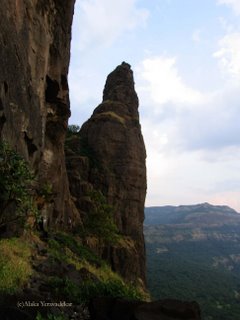
The unforgiving rock allows no room for error.
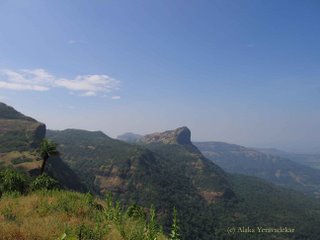
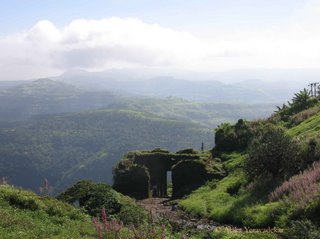
The narrow gap - At Dhak Cha Bahiri

manjar sumbhaa

That's what the jutting out piece of rock is called. It literally means the cat's forehead.. see any resemblances?
Friday

shivthar ghal

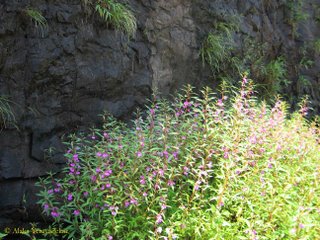
wayside blooms..


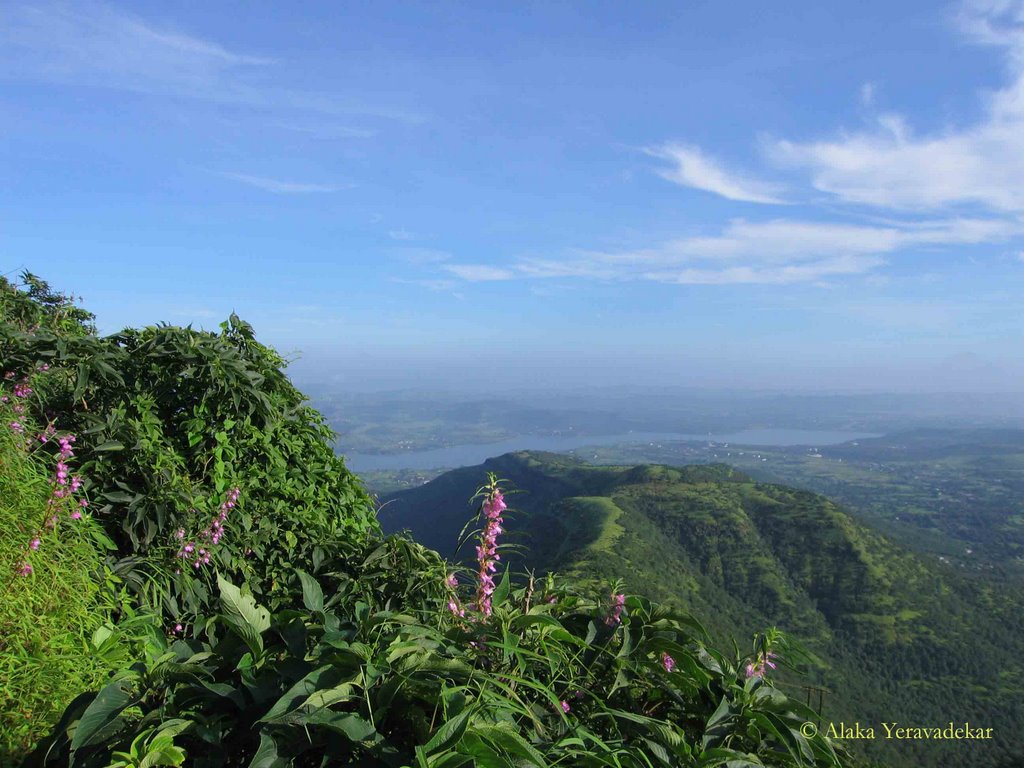
This is balsam, a common and rather pretty flowering plant found in the western ghats in monsoon.

why sahyadris continue to hold me in thrall..

Thursday

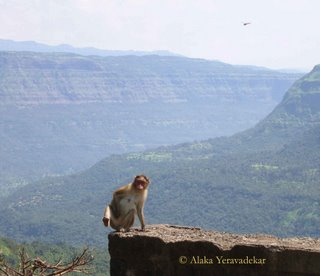
Monkey business!


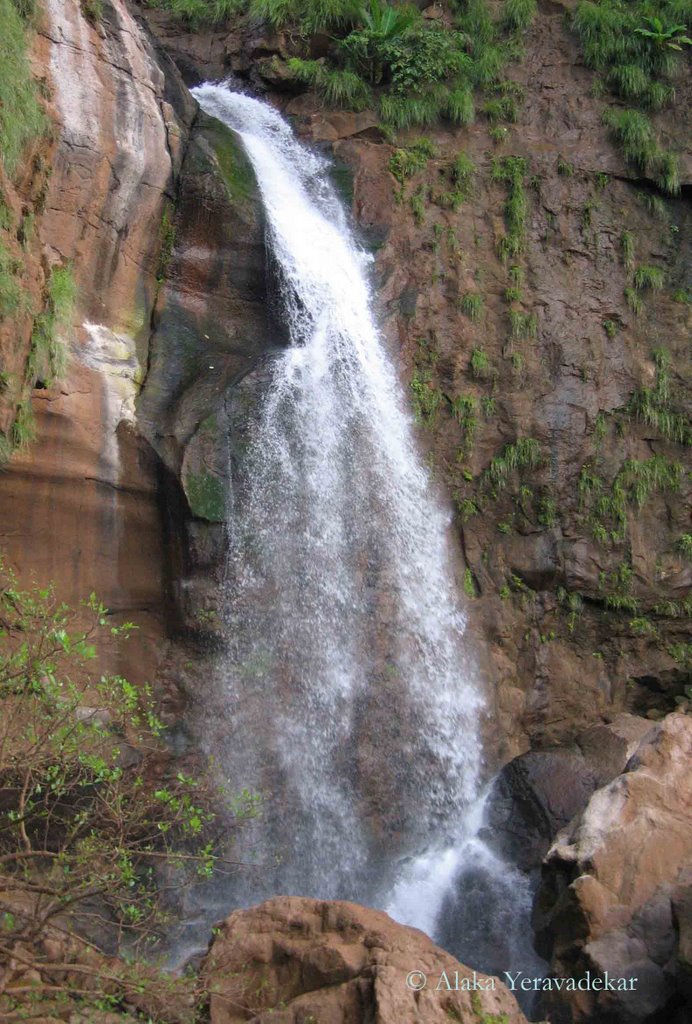
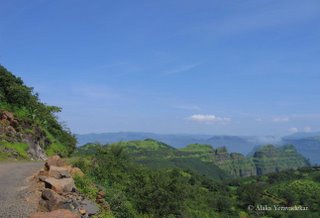
Views from varandha ghat. Normally in the rainy season, this ghat is cloaked in mist and there are several waterfalls cascading down the surrounding mountains.
These look awesome when viewed through binocs.
You can easily get some chai and pakodas at the few stalls that line this portion of the ghat.

Sunday

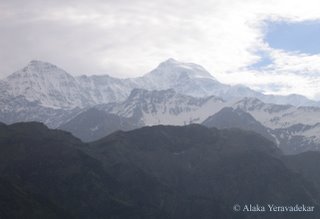
Trekking in Garhwal Himalaya

the magnificence of mountains obscures all else
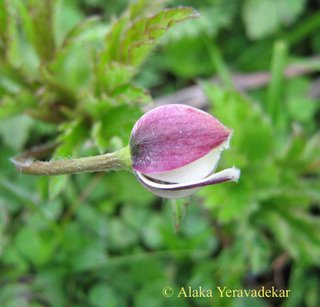
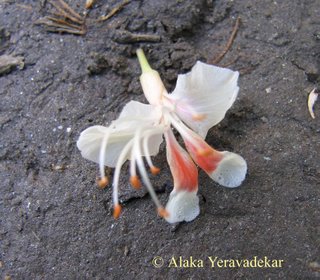

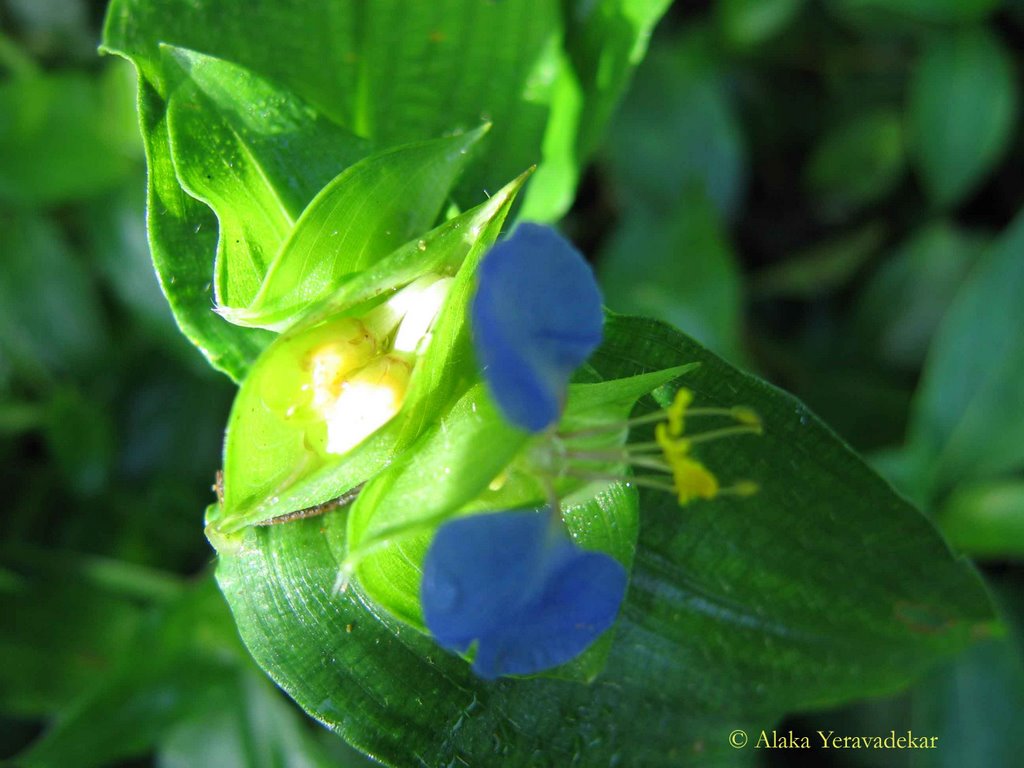
this one was just a 1 cm flowerhead.. Heil Macro mode!